
In Karud factory we manufacture steel chair frames for furniture producers across Europe and UK — from simple four-leg designs to cantilever, swivel, and specialised medical frames. Every frame is made on our own CNC bending machines, to your drawing, concept, or an existing sample. Custom manufacturing is at the heart of what we do.
Types of Chair Frames
Cantilever Frames
Single continuous tube bent into a cantilever (sled-base) shape, offering flexibility and a light, modern look without back legs. Typically made of steel tube with outer diameter in range of fi22mm (ca 7/8″) to fi25mm (ca 1″). Sometimes made of rectangular profiles with equivalent stiffness parameters.
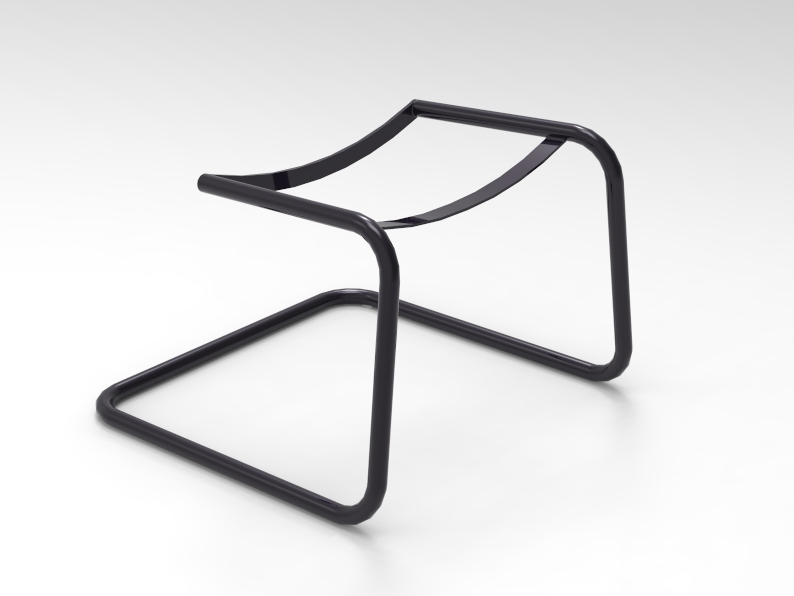
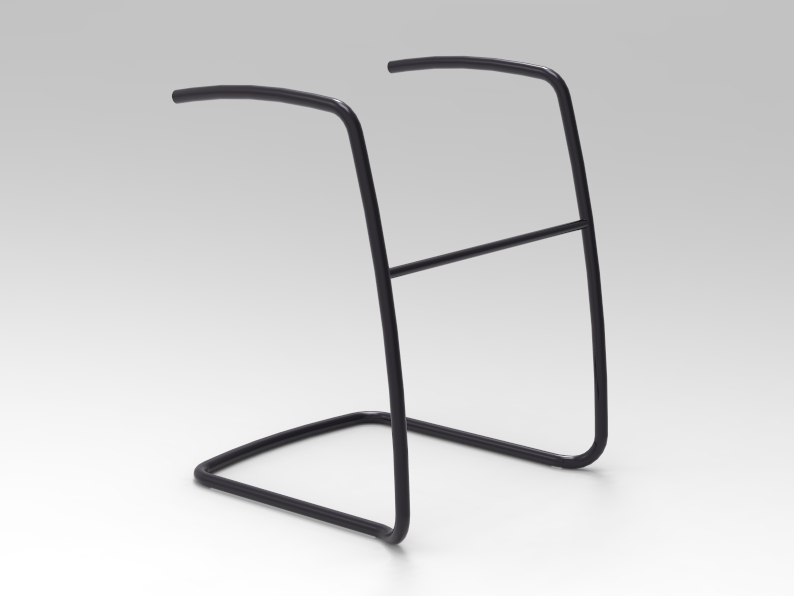
- Without armrests
The classic, minimal cantilever silhouette — a clean line from front foot to backrest, suited to conference rooms, waiting areas, and dining applications where a compact footprint matters.
- With armrests
Same cantilever principle with an integrated or welded armrest section, offering added comfort for office, meeting, and lounge seating.
Both versions can be produced as a stackable variant, with the tube geometry adjusted to allow chairs to nest for compact storage and transport — a common requirement for conference centres, event venues, and training rooms.
Typical applications: offices, conference and meeting rooms, waiting areas, canteens, event and training spaces.
Four-Leg Frames
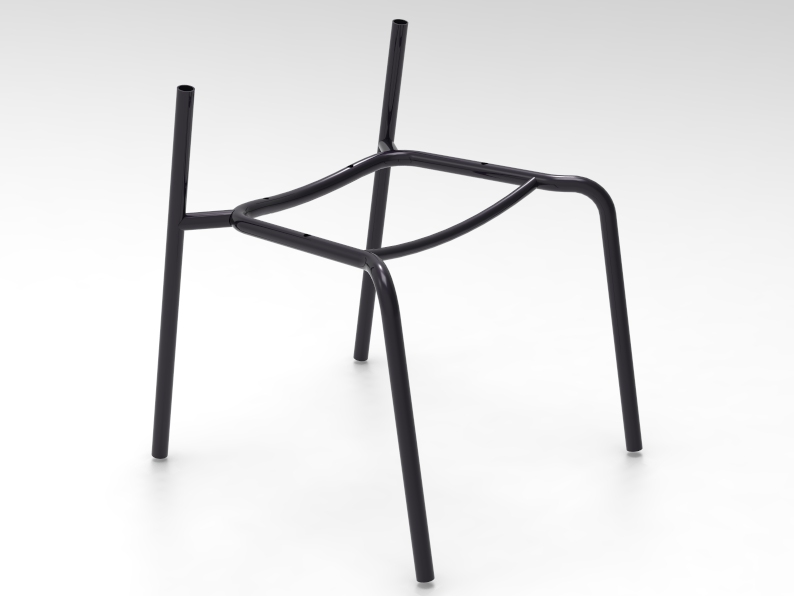
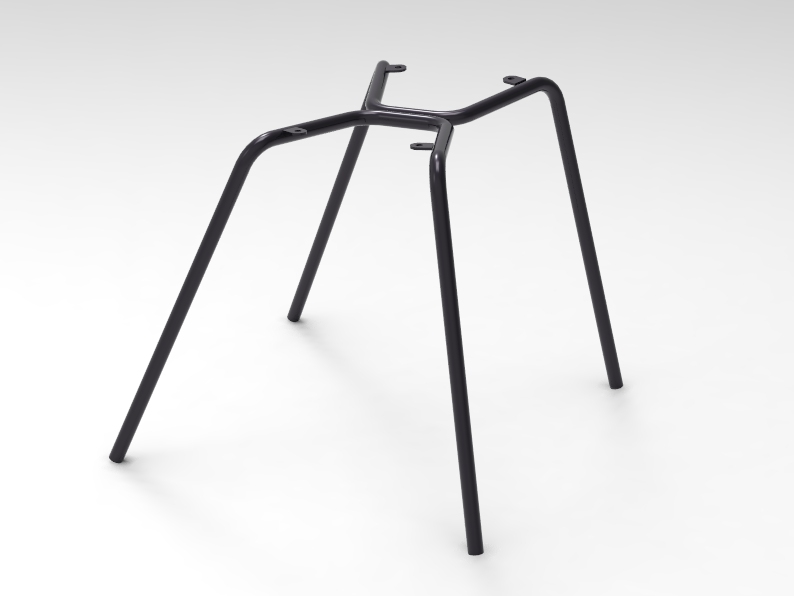
Classic, stable four-leg construction — welded or bolted, in round, square, or oval tube profiles, built to your dimensions.
- With backrest mounting
Frame includes a dedicated mounting point or bracket for attaching a separate backrest element — used when seat and back are upholstered or moulded as separate parts.
- Prepared for one-piece plywood shells
Frame designed for a moulded plywood (or similar) shell that combines seat and back in a single piece, with no separate backrest mounting required — the shell simply fixes to the seat frame.
- With armrests
Four-leg frame with an integrated or welded armrest section for added comfort in office, dining, and lounge applications.
- Without armrests
The standard, space-efficient four-leg frame — suited to dining, canteen, and general seating where armrests aren’t required.
Typical applications: dining chairs, canteen and cafeteria seating, general office and meeting room chairs, hospitality seating, school metal chairs.
Skid frames (also known as sled chair frames)
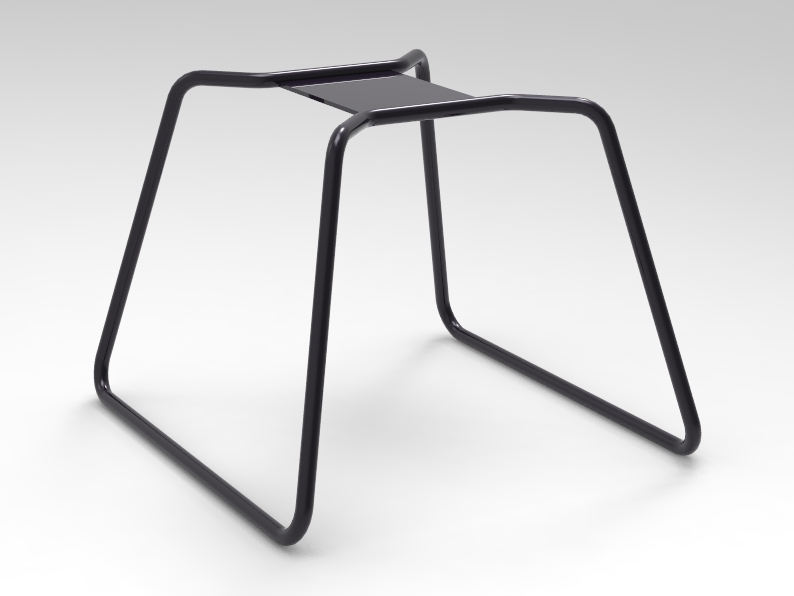
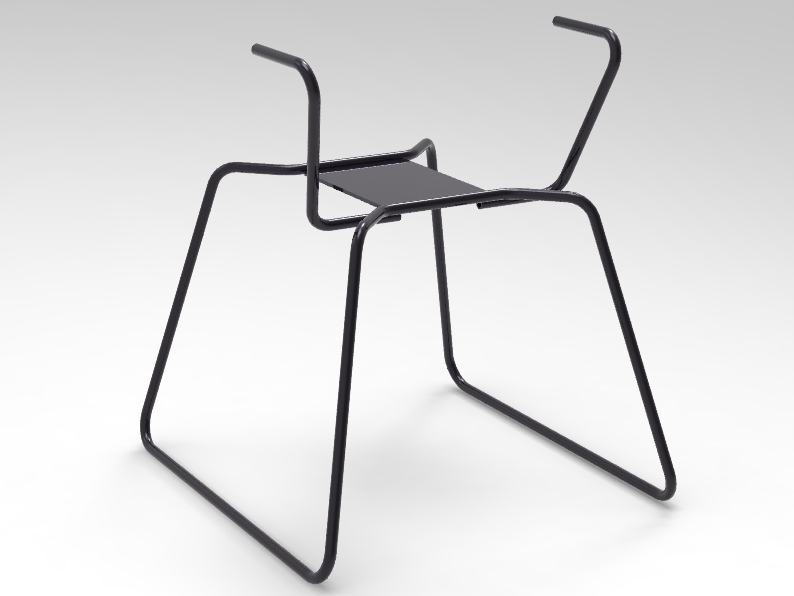
Chair frames built on a closed skid (sled) base — the tube runs in a continuous loop along the floor line, giving a stable, four-point contact without individual legs. A popular alternative to cantilever frames where a heavier, more grounded look is preferred. Typically made of steel tube or rod in diameters ranging from fi12mm (ca 1/2″) to fi18mm (ca 3/4″)
- With armrests
Skid chair base with an integrated or welded armrest section, suited to lounge, office, and hospitality seating.
- Without armrests
The standard skid silhouette — compact and efficient for dining, conference, and general seating.
- With backrest mounting
Frames include a dedicated mounting point or bracket for a separate backrest element, used when seat and back are upholstered or moulded separately.
- Prepared for one-piece plywood shells
Chair frames designed for a moulded plywood (or similar) shell combining seat and back in one piece, fixing directly to the seat frame with no separate backrest mounting.
Both armrest variants can also be produced as a stackable version, with the skid geometry adjusted to allow nesting for compact storage — useful for conference and event seating.
Typical applications: conference and meeting rooms, schools, hospitality and lounge seating, dining and cafeteria chairs, event and training spaces
Advantages of steel chair frames:
- High strength and load-bearing capacity – Steel can support heavy weights and is significantly stronger than most plastics or lighter wooden structures.
- Durability and longevity – With proper protection (e.g. powder coating), a steel frame lasts for many years without losing stability.
- Stability – Provides solid and rigid support, which improves comfort and safety during use.
- Resistance to mechanical damage – Harder to bend, crack, or deform compared to cheaper materials.
- Resistance to pests and rotting – Unlike wood, it is not attacked by insects and does not decay.
- Easy to clean – Smooth steel surfaces (especially painted or chrome-plated) are easy to wipe and do not absorb dirt.
- Versatile finishes – Powder coating, chrome plating, brushing, or painting in any colour allow the frame to match different interiors.
- Fire resistance (!) – Steel does not burn as easily as wood or some plastics.
- Recyclability (!) – Steel is fully recyclable – a significant environmental benefit. Made from iron and nickel, the main constituents of Earth’s core, it ranks among the materials most fundamentally connected to our planet. (see this article: Steel: Earth’s most abundant metal and fully recyclable)
- Design flexibility – Suitable for office, conference, café, and modern designer chairs.
Main limitations which also shall be considered: greater weight compared to some wood or plastics, and the need for corrosion protection in humid conditions – this can easily be solved by using known measures or stainless steel.