
Tube bending and profile bending on our own CNC machines is our factory’s specialization. Using five different technologies, we provide both mass production of furniture frames and custom bending services. We primarily work with carbon steel and stainless steel.
Why choose Karud?
- Five CNC bending technologies in one place
- Decades of experience in mass production of furniture frames
- Full quality control at every stage
- Comprehensive implementation possible: bending + welding + powder coating
- Flexibility – from single pieces to large series
Our bending technologies
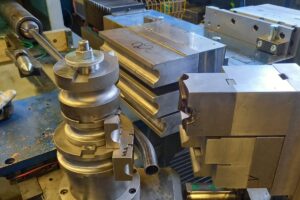
CNC mandrel tube bending
Ø10–Ø35 mm
High-precision tube bending using an internal mandrel. This allows for tight radii with minimal tube flattening and corrugation. An ideal solution for tight frame geometries and components requiring high accuracy. We use this type of machines since the company was founded, reliable and precise.
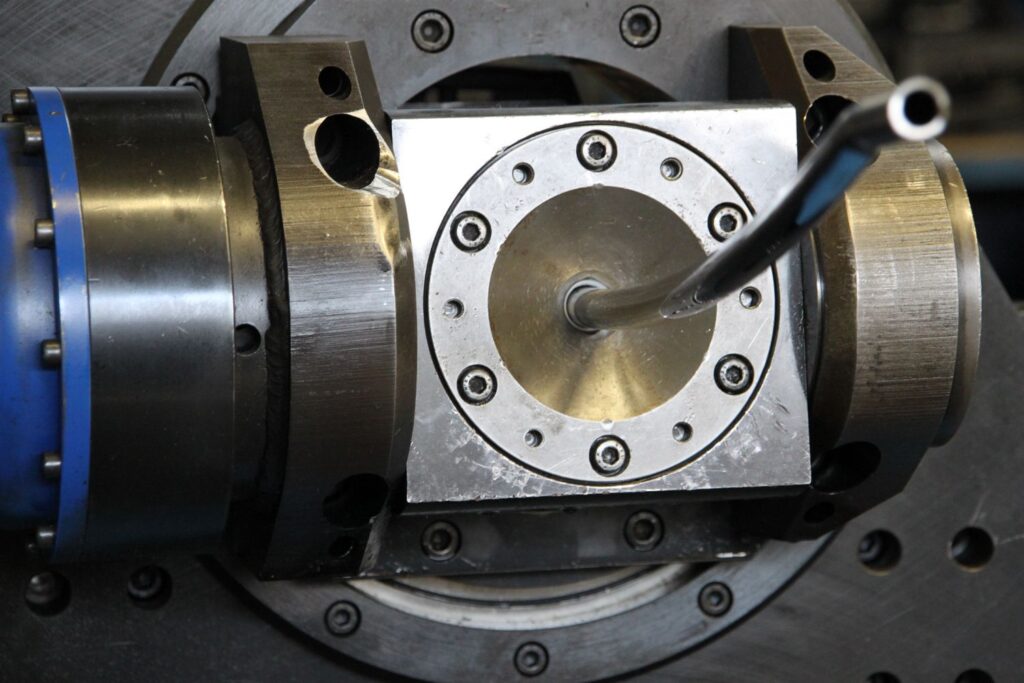
CNC tube freeformbending
Ø14–Ø25 mm.
A flexible method for bending tubes without a mandrel. It is characterized by high speed and freedom of shaping. It works well on components with many different radii and three-dimensional shapes. Multiple radii can be produced with a single tool. We have been working with these machines since 2006; experience with this technology is key. Unmatched flexibility.

3-Roller CNC Bending
Tubes up to Ø40 mm + profiles up to 60×30×2 mm
Designed for bending large radii and arcs with variable curvature. It enables precise forming of both round pipes and rectangular profiles. Often used for larger components.
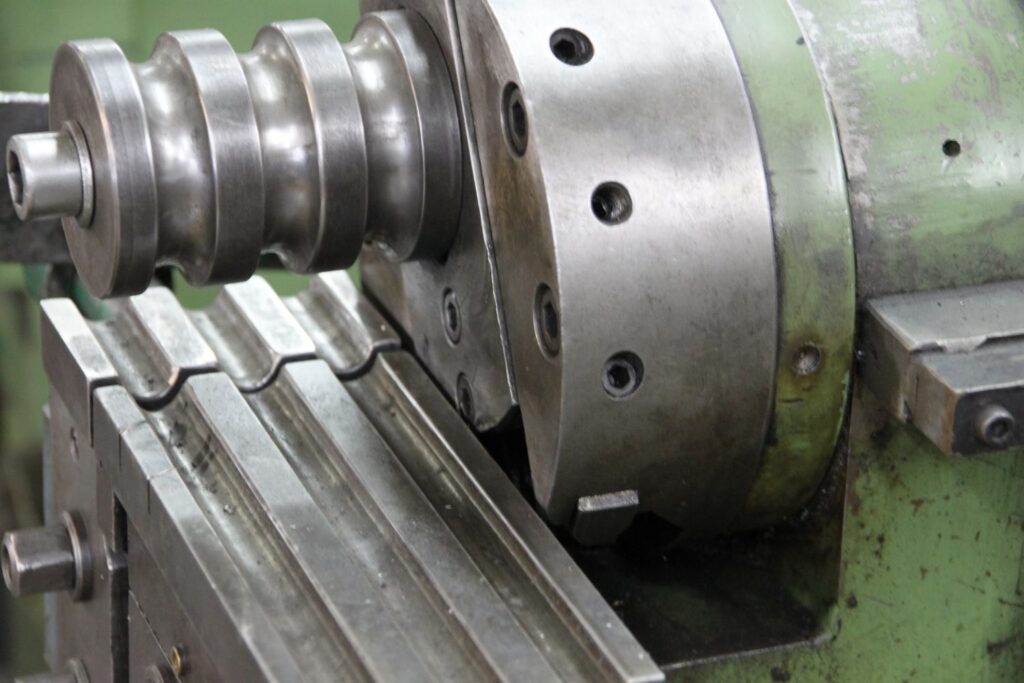
Two-head mandrel-less bending
Ø6–Ø22 mm and flat bars
Rapid bending of simple, repeatable parts on a dual-head machine. The mandrel-less method is particularly effective for producing legs, handles, and other frame components with regular shapes. It ensures high productivity while maintaining good accuracy.
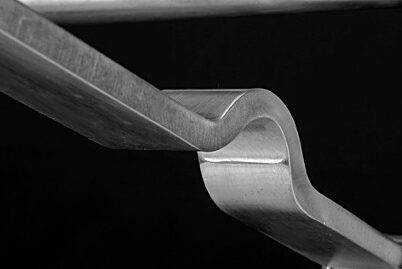
Bending on presses (in molds)
Bending in dies on hydraulic presses ensures high repeatability and shape stability in larger production runs. Used for bending more difficult transitions and specific, repeatable forms.
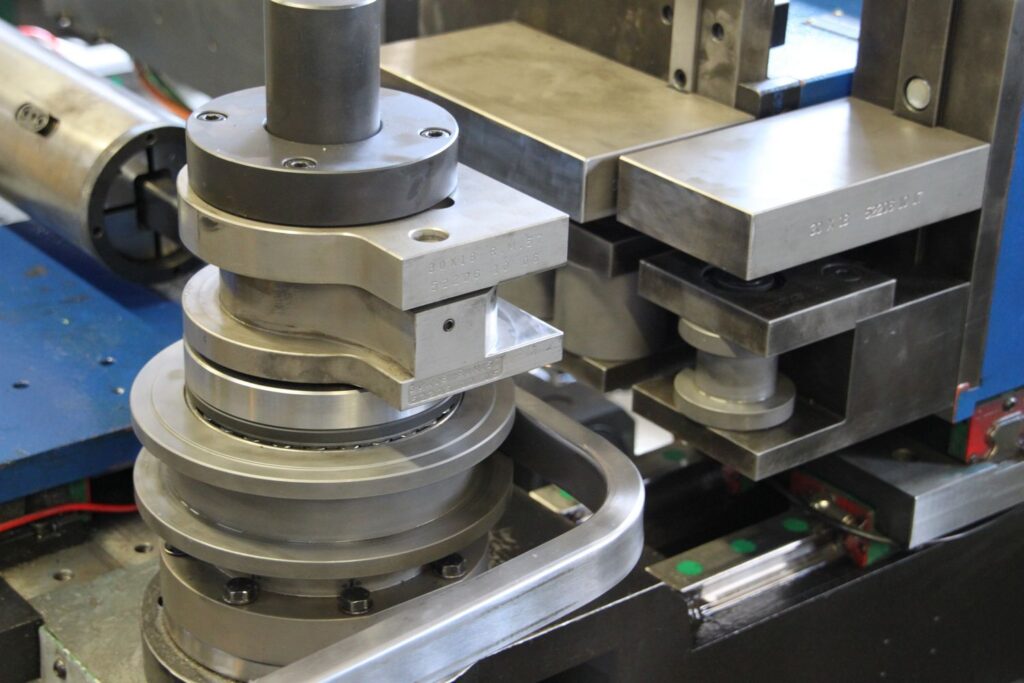
Bending of bars and profiles
In addition to classic tube bending, we also bend bars in the Ø8–Ø14 mm range. Using CNC machines, we can precisely form bars and profiles, which we then use in the production of our furniture frames. This solution allows us to maintain high repeatability and quality of structural components.
Which bending technology should I choose?
Not every bending method is suitable for every application. Below is a brief guide to which technology works best for specific applications:
CNC Mandrel Tube Bending
The best choice for small radii and high precision requirements. We use it for complex frame geometries, thin-walled components, and wherever maintaining a round tube cross-section is essential, although for complex shapes, investing in dedicated tooling may be necessary.
CNC Freeform Tube Bending
Works well with components with variable and larger radii, as well as with 3D shapes. It is faster and more flexible than mandrel bending, which is why we readily use it for less demanding but diverse shapes. It does not require tools for each radius; one tool for the entire frame.
CNC 3-Roller Bending
Ideal for large radii, curves, and large-sized components. We use them for both round pipes and rectangular profiles, as well as flat bars, when we need gentle, long bends, flat or minimally helical bending.
Two-Head Mandrelless Bending
Best for the production of repeatable components, such as legs, handles, and simple frame details. It provides high productivity while maintaining good accuracy. However, the lack of wall support during bending does not provide the same aesthetics as mandrel tube bending.
Press Bending (in Molds)
We choose this method for larger batches and specific, repeatable simple shapes. Dies guarantee high stability and repeatability of the detail; the disadvantage is the need for individual tooling.
Bent materials
We primarily bend:
- Carbon and structural steel: DC01, S235, E220, E355, E420, DP600
- Stainless steel: 304, 304L, 316
- Aluminum, copper, brass, titanium – occasionally, upon request
We select the bending technology appropriate to the material grade, wall thickness, and required radius
Bending quality and technical advice
We ensure high-quality bending with every order. We have been providing professional services for almost 30 years – minimal flattening, no wrinkling, and maintaining the required tolerances. We also assist in selecting the appropriate bend radius and material grade for a specific application. Thanks to our experience in furniture frame production, we know how to combine design requirements with technological possibilities to ensure the final component is both durable and cost-effective.
If you would like to learn more about pipe bending technology and selected issues, we encourage you to read the following article:
See the gallery of metal frames made of bended tubes


